Puppy Only Stops Crying If You're Right by the Crate?
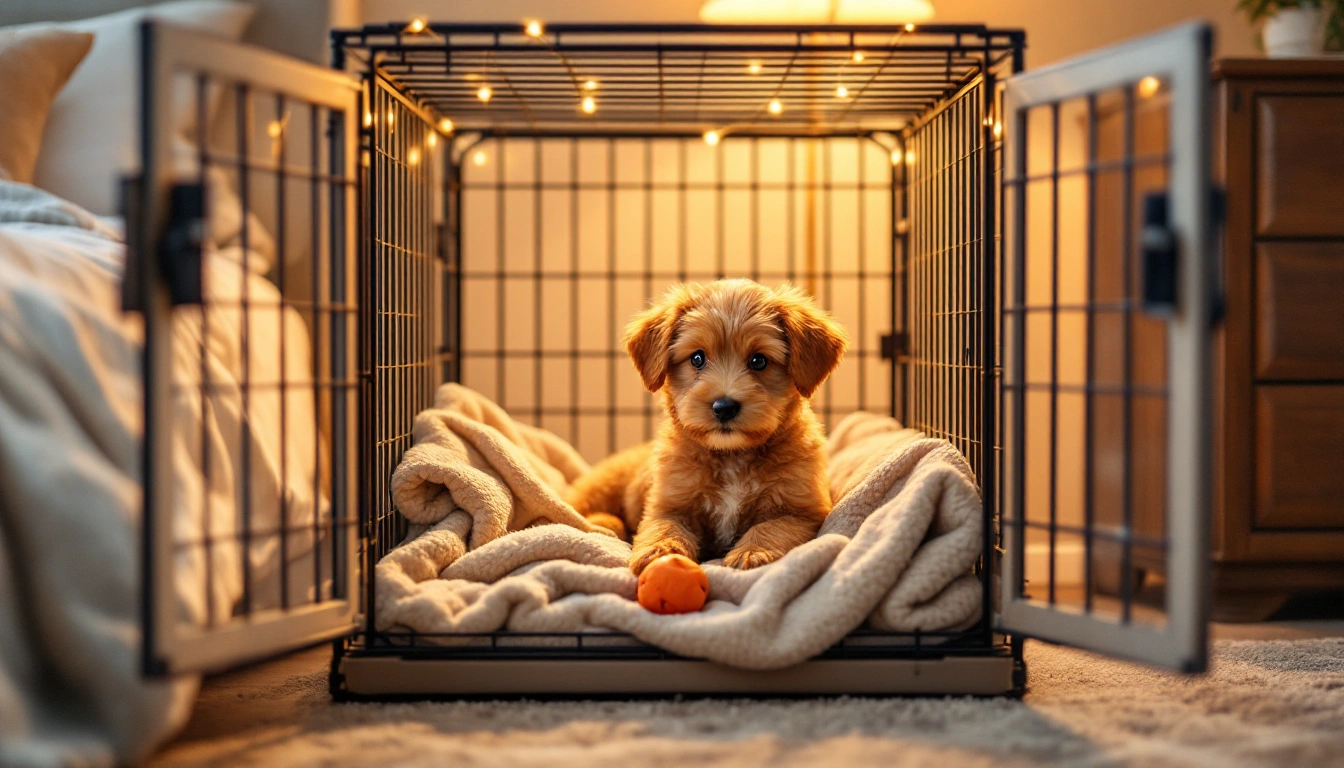
You sit next to the crate and your puppy is quiet. You stand up to leave and the crying starts instantly. This is not your puppy being manipulative — it can't be, at this age. Your puppy has just been separated from its littermates and mother, and right now you are the only familiar thing in a strange room. The crying is a stress response, not a plan. The single most important thing tonight: don't try to fix the "won't settle without me" part yet. Tonight is about safety and sleep, not independence training.
Here's what to actually do. Sit or lie close enough that your puppy can see or smell you, with a hand resting near the crate door if that helps. Stay calm and quiet — no talking your puppy up, no petting through the bars, just steady presence. Once your puppy is fully asleep, you can usually ease away in stages: move a foot back, wait, move again. Most puppies won't wake up the second you're gone if you leave slowly instead of all at once. If your puppy startles awake, go back to where you were and wait for a deeper sleep before trying again.
What's normal: needing you close for the first few nights, waking and crying again 20 to 40 minutes after you leave, and needing several attempts before a clean exit. What's not: crying nonstop for hours even with you sitting right there, or physical signs like shaking, drooling, or trying to escape the crate. That level of panic, especially if it continues past the first couple of nights, is worth mentioning to your vet — it can be a sign of a puppy who needs a slower, more structured plan than "wait it out."
A couple of small things can take the edge off while you're still close by. A shirt you've worn (unwashed, so it still smells like you) tucked into the crate can help some puppies settle a little faster once you do step away, since scent matters more to a puppy than sight does. Keeping the room dim rather than pitch dark also helps — full darkness in an unfamiliar room can add to the unease on top of everything else that's new tonight.
Timeframes to expect: most puppies need you physically close for 2 to 4 nights before you can start stepping back gradually. By night 5 to 7, many puppies can fall asleep with you a few feet away instead of right at the crate door. Full independent settling — you in another room, puppy calm in the crate — often takes 2 to 4 weeks, not one weekend, and that's completely normal.
This exact stall-then-cry pattern is exactly what the crate tracker in our free Puppy's First 30 Days pack is built to walk you through night by night.
A few things make this harder than it needs to be. Leaving too fast, all at once, teaches your puppy that your leaving means panic — so the crying gets worse each time you try, not better. Going back in the second you hear crying (instead of waiting to see if it's a quick protest or real distress) can turn a 30-second fuss into a learned habit of crying until you appear. And skipping the "sit close" step to jump straight to "cry it out" from another room is too big a leap for a brand-new puppy and usually backfires with louder, longer crying the next night.
The next two weeks matter more than the first night. Once your puppy can fall asleep with you a few feet away, start adding small gaps: leave the room for 30 seconds, come back before any crying starts, and stretch that gap a little each night. A crate that actually fits your puppy's current size — not too big, not too small — makes this whole process faster, since puppies settle better in a space that feels like a den rather than an open room. see the crate size and setup that worked for a screaming first-night puppy can save you a few nights of trial and error.
By week two or three, most puppies who started this "needs me right there" way are sleeping several hours at a stretch with you in your own bed, not next to the crate. Getting there is a slow build, not a single trick — and needing to be close on night one doesn't mean you're doing anything wrong.