Crate Training a Puppy That Screams the Second You Leave
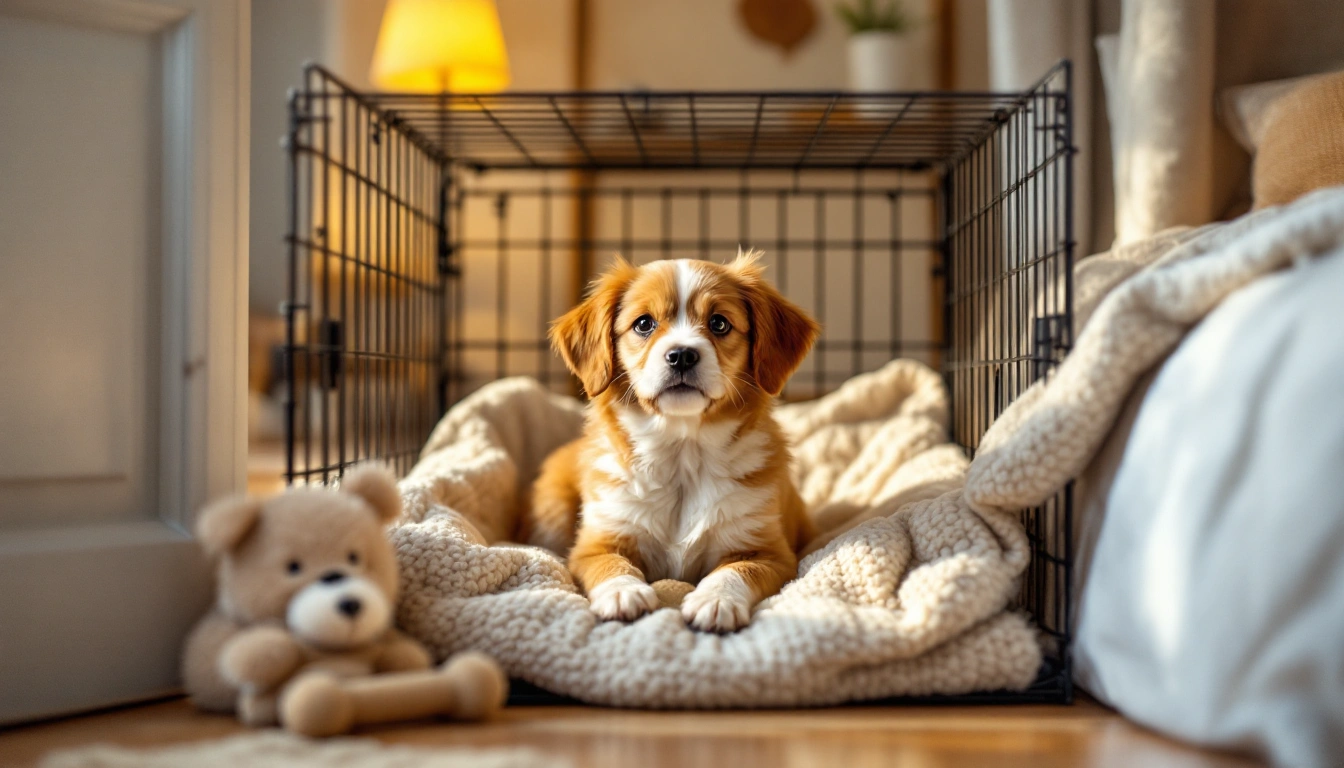
Your puppy settles in the crate just fine — until you take one step toward the door, and then it's full-on screaming. This is one of the most common crate problems there is, and it means you moved faster than your puppy is ready for, not that crate training is failing. The single most important fix: stop leaving the room entirely for now, and start training the "you leaving" part in tiny pieces your puppy can actually handle.
Here's how to rebuild it. Start with your puppy calm and settled in the crate, and take one step away — not out of the room, just one step. If they stay quiet, step back and reward with a calm word or a treat through the bars. If they start to fuss, you went too far too fast; go back a step, wait for quiet, then try again. Over several short sessions (5 to 10 minutes, a few times a day), stretch the distance: one step becomes two, then a lap around the room, then a few seconds with your back turned, then finally stepping just outside the door and back in. Reward calm, not silence during crying — the goal is teaching "this is safe," not just waiting out the noise.
Feed your puppy their meals in the crate during this stretch, and give them a stuffed chew or frozen treat only when they're in there — this builds a strong association between the crate and good things happening, separate from whether you're in the room. Keep sessions short and end on a calm moment, even if that means ending earlier than planned. Ending while your puppy is screaming teaches "screaming makes the door open," which is the exact opposite of what you want.
What's normal: some protest crying during the first few sessions of any new distance, and slower progress on some days than others — this isn't a straight line. What's not normal: a puppy who never calms down even at a few seconds of distance after 2 to 3 weeks of consistent work, or physical signs of panic like drooling, scratching at the crate until they bleed, or trying to break out. That level of distress, especially if it doesn't improve with a slow, structured approach, is worth a conversation with your vet or a certified trainer about separation anxiety specifically.
Timeframe: most puppies can handle a few minutes alone within 1 to 2 weeks of daily, short sessions. Working up to a full hour alone in the crate often takes 3 to 6 weeks. It's slow on purpose — rushing this stage is exactly what causes the screaming-the-second-you-leave pattern in the first place.
If you're stuck at the same distance for several days with no progress, break it down even smaller than feels reasonable. Instead of a full step, try leaning your weight away without actually moving your feet. Instead of leaving the room, try standing just outside the door frame where you're still visible. It can feel painfully slow, but tiny, winnable steps build confidence faster than a bigger step your puppy fails at over and over.
This step-by-step distance ladder is the entire backbone of the crate tracker in our free Puppy's First 30 Days pack, built for this exact "fine until I move" problem.
A few habits keep this problem going instead of fixing it. Leaving for a full 10 minutes right after your puppy could only handle 10 seconds skips the whole point of the ladder and teaches your puppy that leaving means panic. Coming back the moment crying starts (instead of waiting for even a two-second gap of quiet) rewards the crying directly. And using the crate only for punishment or only when you're leaving the house makes the whole space feel like a bad sign instead of a safe one.
Over the next couple of weeks, keep sessions short, frequent, and boring on purpose — boring is the goal. A crate that's the right size (enough to stand, turn, and lie down, not much more) and a comfortable mat make it easier for your puppy to actually relax instead of pace. see the exact crate and mat setup that stopped the screaming can help if you're not sure your current setup is helping or working against you.
Screaming the second you leave is a phase, not a verdict on your puppy or your training. Go slower than feels necessary, and the distance gets easier faster than you'd expect.