Crate vs. Playpen for a Puppy: Which One First?
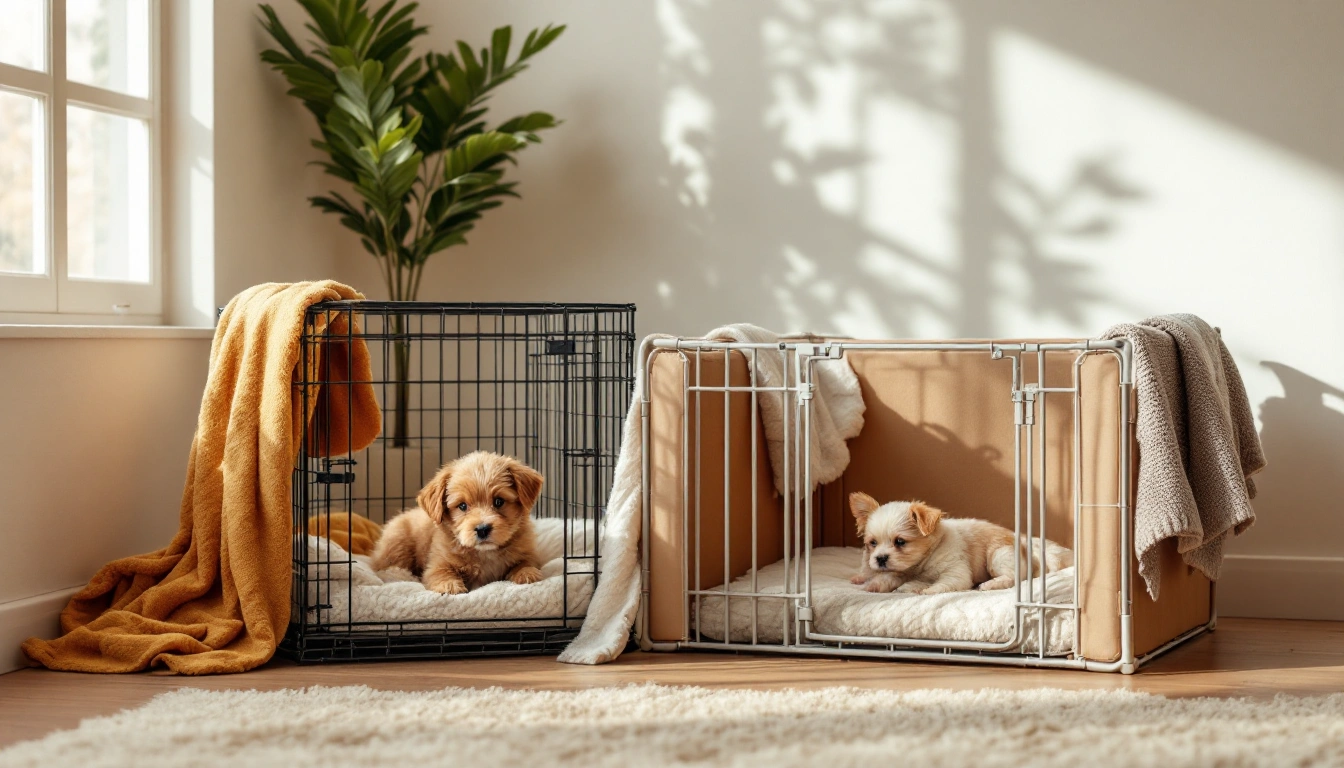
You're standing in the aisle trying to decide between a crate and a playpen, and the honest answer is you'll likely want both, used for different things. A crate is for sleep, travel, and short periods when no one can supervise directly — it's small on purpose, so your puppy learns to settle rather than pace. A playpen is for supervised or semi-supervised active time — room to stand, stretch, play with a toy, and move around, with space for a water bowl and a pee pad if you're using one. The single most important distinction: a crate teaches calm and containment; a playpen gives room to be a puppy without the run of the whole house.
Here's how most households end up using both. The crate becomes the go-to for overnight sleep, naps during the day, and any stretch where your puppy would otherwise be unsupervised on open floor — car rides and quick errands included, once your puppy's used to it. The playpen becomes the daytime base when you're home and working, cooking, or otherwise nearby but not able to watch every second: your puppy can play with toys, chew, and move around in a contained space instead of getting into things or having an accident somewhere you won't notice for a while. Some setups connect the two directly, with the crate door left open inside the playpen, so your puppy can choose to retreat to the smaller space when they want quiet.
What's normal: a puppy who protests the crate more than the playpen at first, since the playpen offers more freedom and toys to distract from any unease. What's not normal: panic or nonstop escape attempts from either setup that don't ease with short, positive introductions over a week or two — that's worth slowing down the introduction process rather than pushing through it, and a call to a trainer if it doesn't improve.
Size and timing matter more than which one you pick first. A crate should be just big enough to stand, turn around, and lie down comfortably — bigger invites using one end as a bathroom. A playpen needs enough floor space for a bed, water, and room to move, which usually means more square footage than people expect on the first purchase. Budget for both within the first month or two if you can; buying a playpen only to add a crate a few weeks later (or the reverse) usually costs more than getting both from the start.
Most families find their rhythm between the two within 2 to 3 weeks — a rough sense of when the crate makes sense and when the playpen does, based on their own schedule rather than a rule from an article.
A typical weekday for a household using both might look like this: crate overnight and for the first hour after breakfast while everyone gets ready, playpen set up in the kitchen or living room for the workday with toys and water within reach, a supervised outside break at lunch, more playpen time in the afternoon, then free supervised time in the evening before the crate again at bedtime. Laid out that way, neither one is doing all the work — the crate handles the unsupervised stretches, and the playpen handles the supervised-but-busy ones.
Working out that rhythm faster, instead of by trial and error, is exactly what the schedule inside our free Puppy's First 30 Days pack is built to help with.
A few choices make this harder than it needs to be. Buying the smallest, cheapest option of either to save money upfront often means replacing it within a couple of months as your puppy grows, which costs more in the long run than sizing up from the start. Using the playpen for overnight sleep because it feels less confining can actually slow down crate training, since your puppy never gets consistent practice settling in the smaller space. And skipping the playpen entirely to save money can leave you without a safe place to put your puppy down during the many moments a full crate stay isn't necessary but full supervision isn't possible either.
compare crate and playpen setups sized for a growing puppy if you want help sizing both correctly instead of guessing and needing to size up later.
There's no wrong order to buy these in — most families need both within the first month regardless of which one comes first. Get the sizing right, and each one earns its spot for a different part of the day.