Puppy Having Accidents in the Crate? Do This
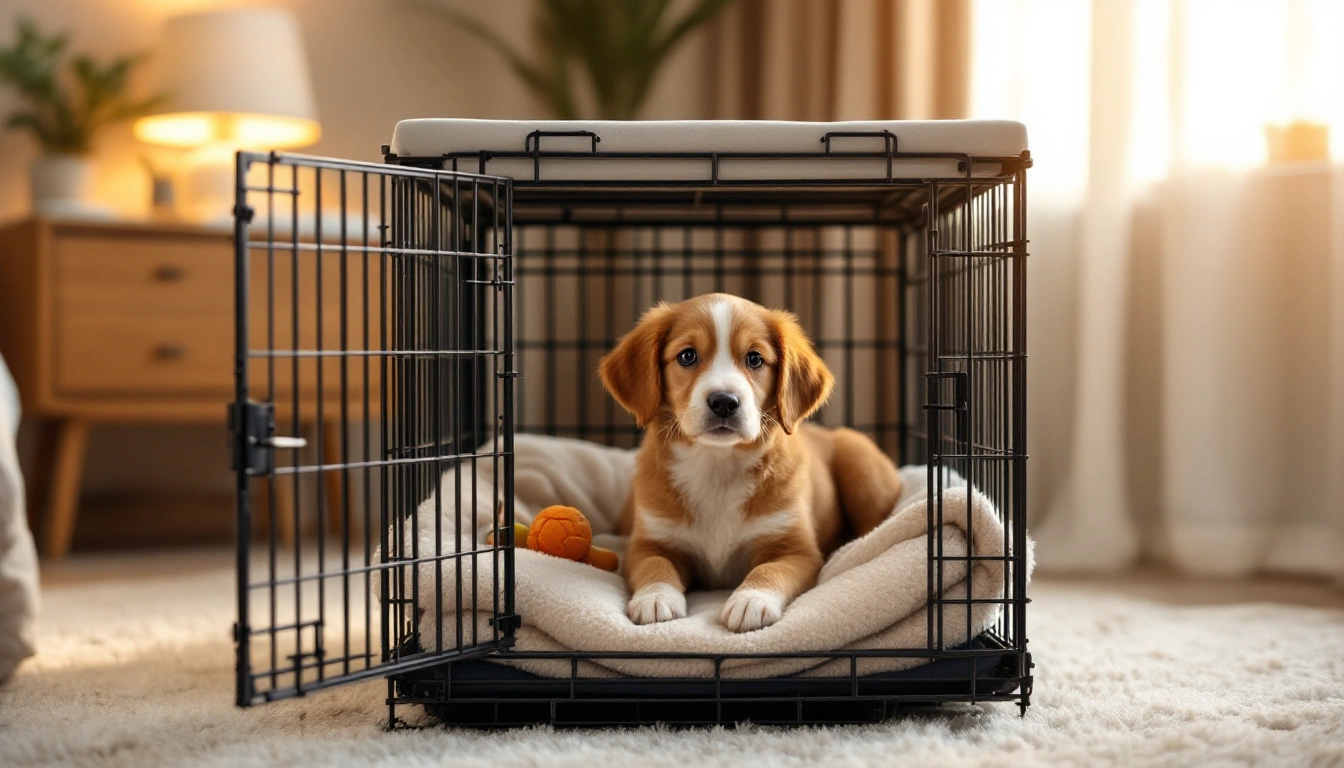
You did everything right — crate, schedule, trips outside — and your puppy still had an accident in there. It's confusing, because crates are supposed to help with potty training, not create a new mess to clean up. The single most important thing to check first: is the crate too big? A puppy that has room to sleep in one corner and go in another hasn't broken any instinct, because the crate isn't actually acting like a den — it's acting like a tiny room.
Here's what to check and fix. Measure your puppy's current crate space: they should be able to stand, turn around, and lie down comfortably, with not much extra room beyond that. If you're using a divider panel for a crate sized for their adult weight, move the divider in — too much space is one of the most common, most fixable causes of crate accidents. Next, check your timing against their age: an 8-week-old puppy can typically hold it about 2 hours, a 12-week-old closer to 3 hours, and a 16-week-old around 4 hours. If your puppy is crated longer than their bladder can realistically hold, accidents aren't a training failure — they're physics. Also rule out a recent schedule change, a new food, or stress (a loud house, a new visitor) — any of these can cause a short-term setback even after weeks of dry crates.
What's normal: an occasional accident during growth spurts, teething, or a disrupted routine, even after your puppy has had a solid stretch of clean crate time. What's not normal: frequent accidents that don't improve after fixing crate size and timing, straining without much output, or a sudden increase in accidents paired with drinking more water than usual. Those patterns are worth a vet visit to rule out a urinary tract infection, which can look exactly like a training regression.
Timeframe: once crate size and timing are actually matched to your puppy's real bladder capacity, most puppies go back to consistently dry crates within a week or two. Full potty reliability, crate or not, usually isn't solid until somewhere between 4 and 6 months old, so occasional slip-ups before then aren't a sign you're doing something wrong.
It's also worth checking what your puppy ate and drank before the crate stretch in question. A big drink of water right before crate time, or a meal within the hour beforehand, makes almost any crate window too long, even one that's normally fine. Moving the last drink of water and the last meal earlier, relative to crate time, often clears up accidents that seemed random but were actually tied to timing you hadn't connected yet.
This exact size-and-timing mismatch is one of the most common issues we built the potty and crate tracker in our free Puppy's First 30 Days pack to catch early.
A few habits make crate accidents more likely. Leaving bedding or a pad in the crate that absorbs moisture lets your puppy go without feeling wet or uncomfortable afterward, which removes the natural incentive to hold it. Crating for longer stretches than their age allows, even occasionally, teaches a puppy that going in the crate is sometimes unavoidable — which undoes weeks of progress. And skipping the "straight to the potty spot" step right after opening the crate door (instead of pausing to say good morning first) means your puppy is holding it even longer than the crate time already required.
Over the next couple of weeks, take your puppy out the second the crate door opens, every single time, before anything else happens. Track potty times against crate times for a few days so you can see the actual pattern instead of guessing. see the potty and crate schedule that stopped the accidents lays out age-based timing if you want it done for you instead of building your own chart.
A crate accident after a good streak isn't a setback in the way it feels like one. Check the size, check the timing, and most puppies are back on track within days.
One more thing worth checking: the crate's location. A crate stuck right next to a heater, in direct sun, or in a loud, high-traffic part of the house can make a puppy restless enough to go simply because they can't settle. Moving the crate to a calmer, more temperature-steady spot sometimes clears up "mystery" accidents that had nothing to do with schedule or size at all.