Puppy Crate Time Chart: How Long by Age
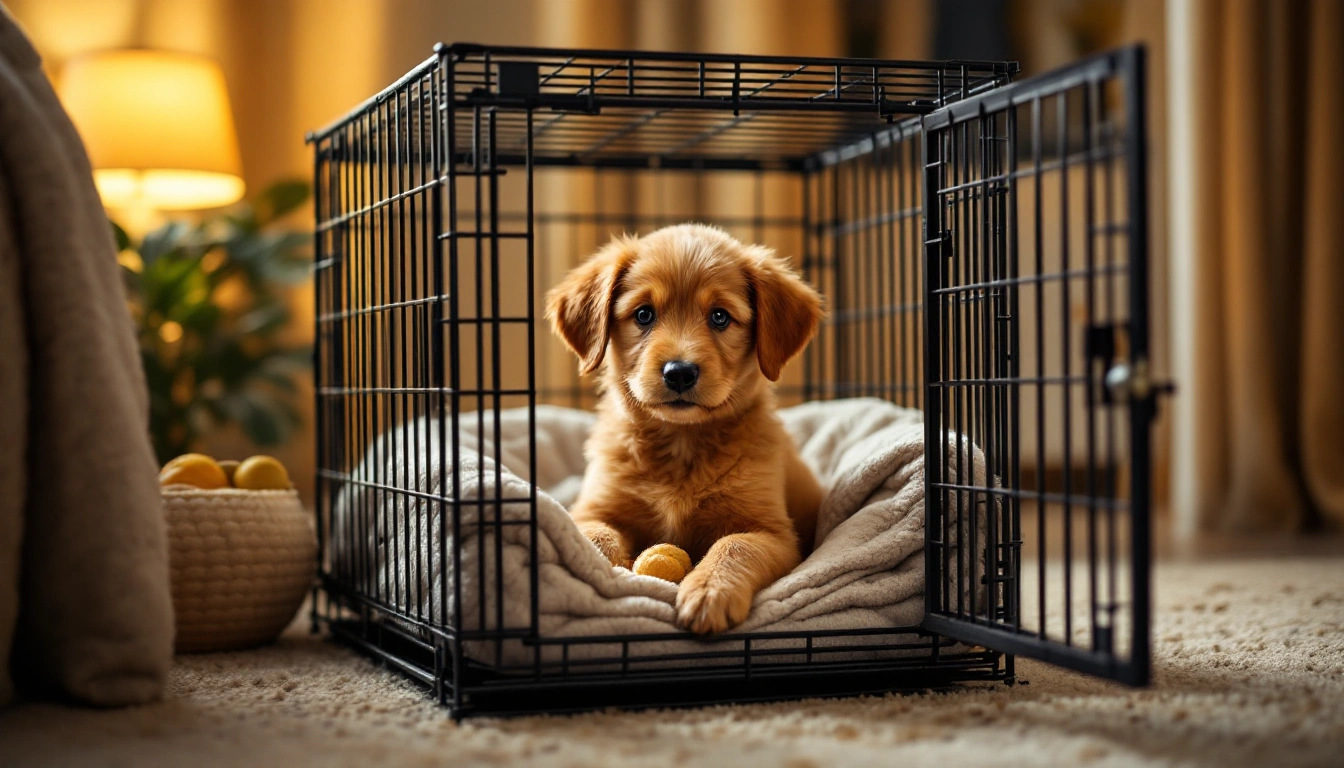
You're staring at the clock, doing math about whether it's okay to leave your puppy crated while you run to the store. Puppy crate time by age comes down to one simple rule: roughly one hour for every month of age, plus one, up to a daytime max of about 4 to 5 hours even for older puppies. So an 8-week-old (2-month-old) puppy tops out around 3 hours during the day, and a 5-month-old tops out around 6 hours — but that's a ceiling, not a target to aim for every day.
Here's the fuller picture by age. At 8 to 10 weeks, plan on 1 to 2 hours max between potty breaks, day or night — their bladder simply isn't built for more yet. At 3 months, that stretches to about 3 to 4 hours during the day. By 4 to 5 months, most puppies can comfortably manage 4 to 5 hours, and by 6 months, many can handle a typical workday of 5 to 6 hours if they got a good walk and potty break beforehand. Overnight is the exception to all of this — puppies typically sleep longer stretches at night than the daytime formula suggests, often managing 6 to 8 hours by 3 to 4 months old, because their metabolism slows down while they're asleep.
These numbers assume a healthy puppy with no other bladder or digestive issues — a puppy who's suddenly unable to hold it for even short stretches, has diarrhea, or seems to be straining is worth a call to your vet rather than just pushing the crate schedule further. Every puppy is a little different, and some take longer to build bladder control than the averages suggest.
Breed size plays a role too, though it's a smaller factor than age. Smaller breeds tend to have smaller bladders relative to how much they drink and eat, so a small-breed puppy might sit at the low end of a given age range while a larger-breed puppy of the same age handles the higher end more comfortably. Activity level before crating matters as much as the chart itself — a puppy that just had a big drink of water or a full meal needs a shorter window than the general rule suggests, regardless of age.
If today's crate math is stressing you out, the crate tracker in our free Puppy's First 30 Days pack lays out this exact chart plus a full daily rhythm around it.
A few habits push puppies past what they can actually handle. Crating right up to the maximum every single day, with no wiggle room, sets a lot of puppies up for accidents, since the "max" is a ceiling for an occasional long day, not a routine. Skipping the pre-crate potty break and walk shortens how long a puppy can realistically last, even if the clock says they should be fine. And assuming a puppy that made it 4 hours once can now always do 4 hours ignores that bladder control builds gradually and unevenly, with some backsliding along the way.
As your puppy grows, the numbers move in your favor fast. Most owners see a real jump in stamina between 4 and 6 months, right around when the adult teeth finish coming in and the bladder catches up to the rest of their body. By a puppy's first birthday, most healthy adult dogs can comfortably handle a typical 8-hour workday in the crate, occasionally, though daily 8-hour stretches still aren't ideal for any dog's mental or physical wellbeing.
A crate that's actually the right size — enough to stand, turn around, and lie flat, without so much extra room that a puppy uses one corner as a bathroom — makes every one of these numbers easier to hit. see the crate setup sized right for each growth stage if you're not sure your current crate is helping or working against the schedule.
You don't need to hit these numbers perfectly to raise a well-adjusted dog. Treat the chart as a guardrail, not a goal, and build in breaks whenever your schedule allows it — your puppy's bladder, and your carpet, will thank you.