A Realistic Puppy Day Schedule for Week One
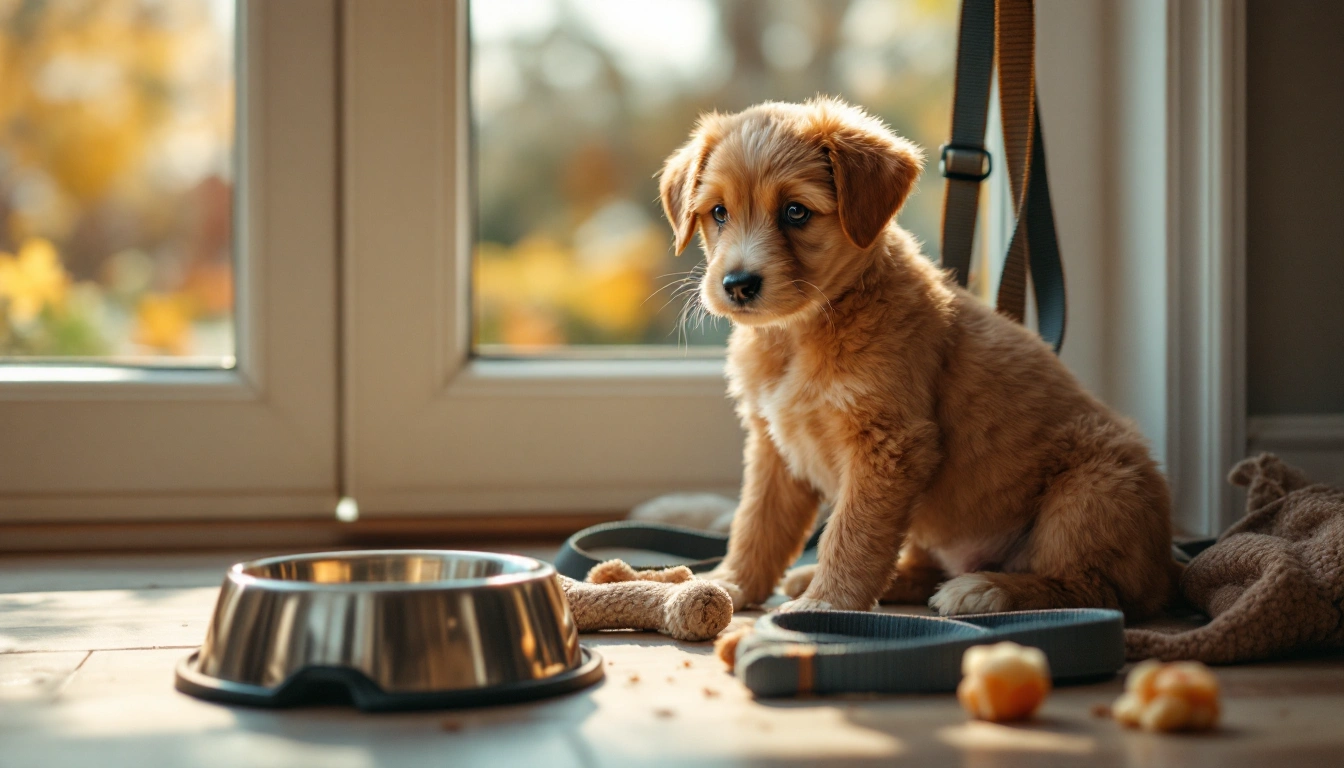
Here's what a realistic day looks like for an 8 to 10 week old puppy in week one. Wake around 6:30am and go straight outside for a potty break before anything else. Breakfast follows around 7am, then another potty trip 10 to 15 minutes after eating, since food moving through a young puppy triggers the need to go fast. A short play or training session — 10 to 15 minutes is plenty at this age — comes next, then your puppy naps, often for an hour or more. Repeat that same rhythm of potty, activity, meal, potty, nap through the day, roughly every 2 to 3 hours, until a final potty break and bedtime around 9 to 9:30pm.
The pattern that matters more than the exact clock times is the order: potty first thing after waking, potty again after eating, and potty after any burst of play, since those three moments are when accidents happen most. An 8 to 10 week old puppy sleeps 18 to 20 hours a day total, so the naps aren't optional extras between the "real" parts of the day — they're most of the day, with short awake windows of activity and eating in between.
A sample stretch might run: 6:30am wake and potty, 7am breakfast, 7:15am potty, 7:30am play, 8am nap, 9:30am potty and short play, 10am nap, 11:30am lunch and potty, 12pm nap, 2pm potty and play, 2:30pm nap, 4pm potty and dinner, 4:30pm nap, 6pm potty and evening play, 7pm short wind-down, 8:30pm final potty, 9pm bedtime. The exact times matter less than keeping potty breaks every 2 to 3 hours and giving your puppy a real nap after almost every awake window, since an overtired puppy gets wound up and bitey rather than winding down on their own.
This is just one sample day — the full pack includes a printable version for every week from pickup through the first month, so you're not redoing this math yourself every time your puppy's routine shifts.
Expect this schedule to shift fast. By week two or three, awake windows stretch longer, naps get slightly shorter and less frequent, and potty intervals can stretch toward 3 hours as bladder control improves. By 4 to 5 months, a lot of puppies are down to 3 or 4 scheduled potty breaks a day instead of 6 or more, with fewer, longer naps replacing the near-constant sleep of week one.
A few mistakes make this harder than it needs to be. Overscheduling activity without enough nap time in between is one of the most common — a puppy who's played with, trained, or stimulated for too long without a nap gets overtired, and an overtired puppy is far more likely to bite hard and ignore cues than a well-rested one. Skipping the after-meal and after-play potty breaks, and only going out "when they seem like they need to," misses the two most predictable accident windows of the day. And an inconsistent bedtime — sometimes 8pm, sometimes 11pm depending on the day — makes it harder for your puppy's body to settle into a rhythm.
If you want the schedule to actually run itself instead of you tracking every potty break and nap from memory, a crate and tracker setup makes it much easier to stay consistent — see the crate and tracker setup that keeps a schedule like this on track.
Your actual schedule will shift around work hours, other family members, and your puppy's individual temperament, and that's fine — the sample above is a template, not a rulebook. What matters most is the repeating pattern itself: potty, activity, meal or nap, potty again, since that rhythm is what your puppy's body and brain start to predict and rely on, even more than the specific clock times attached to it.
If you're working during the day, the same structure still applies around whatever gaps you have — a lunch break potty run, a dog walker, or a shorter list of activities packed into the hours you're home matters more than matching this schedule exactly.
A perfect, Pinterest-worthy schedule isn't the goal in week one. A predictable rhythm of potty, eat, play, nap, repeat is what actually gets you through it, and most families find their own version of this routine clicks into place within the first week or two.