Puppy Toys for Biting Redirect That Actually Work
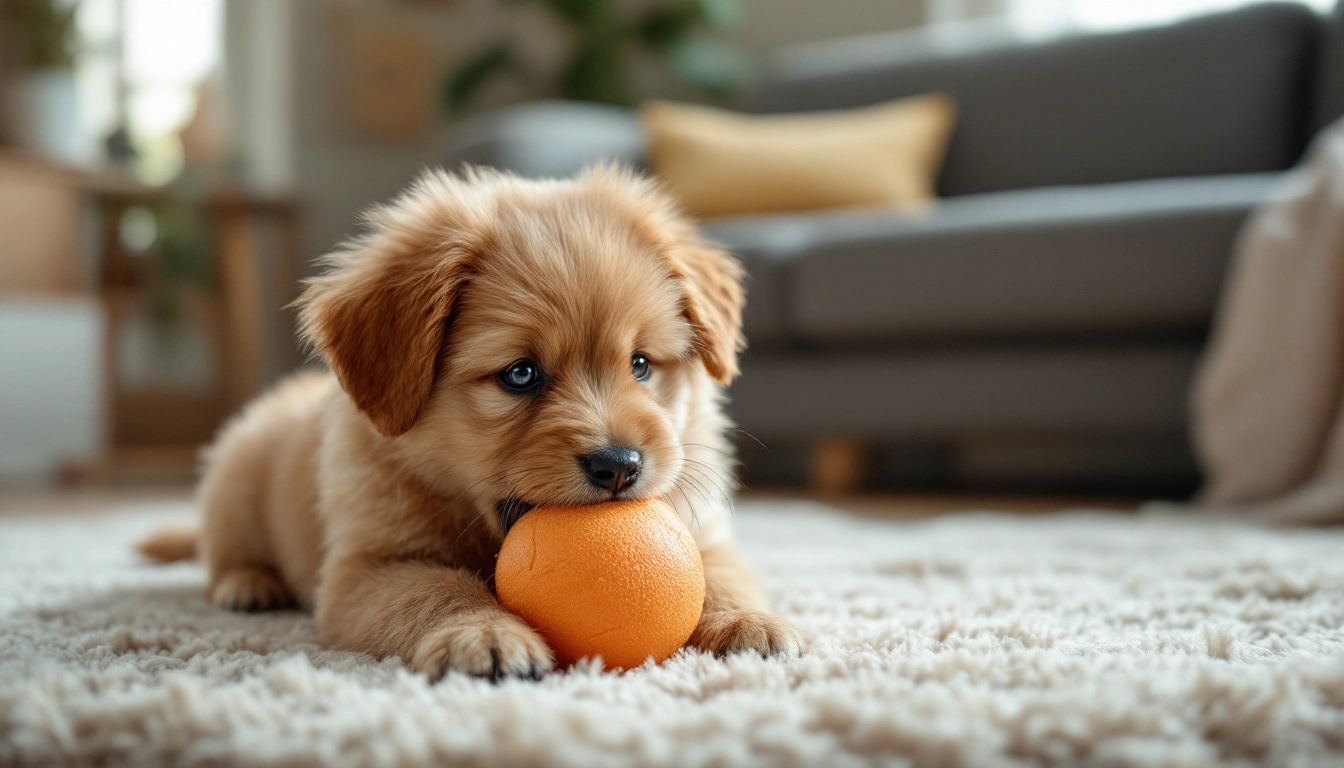
Your puppy's mouth is heading for a hand again, and the toy you grabbed isn't doing anything to stop it. Here's what actually works: something with texture and give — a rope tug, a rubber chew with some flex to it, or a plush toy with a squeaker — held or moving slightly so it competes with the hand for attention. Flat, hard, or silent toys usually lose to skin every time, because there's nothing about them that's more interesting than the thing that's already moving. The single most important part of redirect: swap the toy in before the bite lands, not after, since redirecting mid-bite mostly just teaches your puppy that biting gets a toy handed to them.
Here's how to build a small, effective rotation instead of a pile that gets ignored. A rope tug works well for hand-to-mouth moments because you can keep it moving, which pulls attention away from fingers better than something static. A rubber chew toy that can be stuffed and frozen gives sore, teething gums something satisfying to work on, and cold takes the edge off swelling better than room temperature. A squeaky plush toy is useful in the moment biting starts, since the sound itself often redirects attention faster than the toy's texture does. Keep 3 to 4 toys in rotation and swap them every few days — a toy that's always available loses its pull fast, and a "new" toy that was just put away for a week gets far more interest.
What's normal: a puppy who mouths harder on toys that squeak or move, occasional disinterest in a toy that worked yesterday, and a preference for hands over toys during the most overtired, overstimulated stretches of the day. What's not normal, and worth mentioning to your vet or a trainer: a puppy who won't engage with any toy at all, or biting that seems aimed at causing harm rather than play, since that's a different problem than a toy rotation can solve.
Redirect toys work fastest when they're already in your hand or pocket before the biting starts, not when you're digging through a bin after the fact. Most families see biting drop noticeably within 1 to 2 weeks of keeping a toy within reach during every play session and swapping it in consistently. It won't fully disappear until adult teeth are in, usually around 6 months, but the frequency should keep dropping the whole way there.
Here's how the swap actually plays out in real time: your puppy's mouth heads for your hand mid-play, and instead of pulling your hand away (which can read as a game), you calmly bring the rope toy into the same space your hand just occupied and give it a little movement. Most puppies redirect within a few seconds once the toy is genuinely more interesting than what they were aiming for. If a session ends with a couple of quick redirects instead of a caught bite, that's a session working as intended, even if it didn't feel dramatic in the moment.
The exact toy rotation and swap schedule that makes this consistent, instead of random, is part of the training plan built into our free Puppy's First 30 Days pack.
A few habits undercut even a good toy. Waving the toy in your puppy's face as a distraction, rather than letting them choose to grab it, can turn the toy into another version of a hand — something to chase and bite rather than hold. Leaving every toy out all the time removes the novelty that makes swapping effective, so a puppy stops reaching for any of them. And using an old sock, glove, or shoe as a "toy" teaches your puppy that fabric and hands are fair game, which works against everything else you're trying to redirect.
see the toy rotation that redirects biting fastest if you want a starting set instead of guessing what to buy first — the right texture and size for your puppy's current stage make a bigger difference than the number of toys in the bin.
Biting is a phase, and the right toy in the right moment speeds up how fast it fades. Keep a couple within reach, rotate them, and swap in before the bite instead of after.