Transitioning Puppy Out of Crate at Night: The Steps
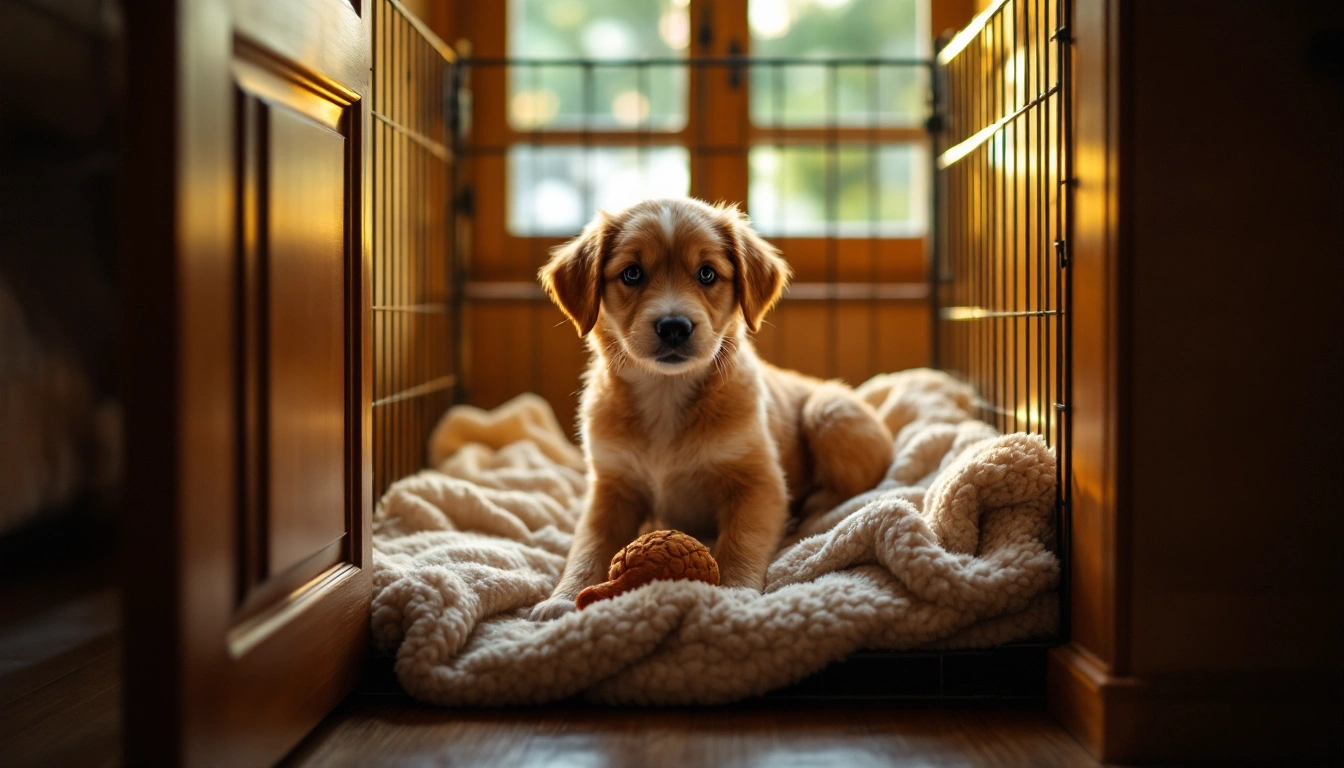
Your puppy's been solid in the crate for a while and you're wondering if it's time to give them more freedom at night. Here's the short answer: yes, once they're reliably holding their bladder overnight and haven't chewed anything they shouldn't in weeks, but the transition needs to be gradual, not all at once. The single most important rule: expand space in small steps and go back a step immediately if accidents or destructive chewing show up, rather than pushing through and hoping it improves on its own.
Here's the actual sequence. Start by leaving the crate door open at night while your puppy is still in the same room, so they can choose to go in or stay out, and see where they settle on their own over a few nights. If that goes well for about a week, try removing the crate door entirely (or propping it fully open) and adding a bit more open floor space around it, still within the same room. Next, extend that same freedom to a small, puppy-proofed section of the room, blocked off with a gate or pen panel rather than the whole space at once. Only after several consistent weeks of no accidents and no chewing at that stage should you consider full room freedom, and even then, keep the door closed to the rest of the house for a while longer.
What's normal: an occasional off night even after weeks of success, especially after a schedule disruption, a new environment, or a growth spurt. What's not normal: a return to frequent accidents or destructive chewing that doesn't improve after going back a step for a couple of weeks — that usually means the previous stage wasn't as solid as it seemed, not that something is wrong with your puppy. If accidents come back suddenly after a long stretch of reliability, it's also worth a vet check, since that pattern can sometimes point to a physical issue rather than a training regression.
Most puppies are ready to start this process somewhere between 6 months and a year old, once bladder control is reliable and the worst of the chewing phase has passed. The full transition, done gradually, usually takes 2 to 3 months from first cracking the door open to full free-roam trust, though plenty of owners choose to keep some version of the crate or a gated space going much longer simply because their puppy prefers it as a den.
Here's what a solid week at the open-door stage looks like before moving on: seven nights with the crate door open, no accidents anywhere in the room, and nothing chewed that shouldn't be. If night five has an accident, that's not a reason to abandon the stage — it's a reason to start the seven-night count over from night six, rather than moving forward on a shakier track record than you think you have. That small discipline, restarting the count instead of rounding up, is what prevents the frustrating cycle of granting freedom too early and pulling it back.
Knowing which readiness signs actually matter, instead of guessing based on age alone, is part of the later-stage milestones covered in our free Puppy's First 30 Days pack.
A few habits slow this transition down. Rushing to full freedom because a puppy seems "grown up enough," without the accident-free track record to back it up, usually means a step backward a few weeks later. Removing the crate entirely instead of leaving it available as an open option can actually increase anxiety in puppies who'd chosen it as their own quiet space. And being inconsistent about which rooms are off-limits from one night to the next confuses a puppy who's still learning where the new boundaries are.
A sturdy baby gate or pen panel sized for your doorway makes the middle stages of this transition much easier to manage than trying to block a gap with furniture. see the gate setup that makes a gradual transition easier if you want that piece sorted out before you start.
There's no fixed timeline that fits every puppy here — some are ready at 6 months, others closer to a year. Follow the accident-free track record more than the calendar, and go back a step without guilt if you need to.